What Every Plant Manager Needs to Know About Pipe Stress Analysis

November 4, 2025

Pipe stress analysis blog project manager graphic (1)

If you manage a process plant, power facility, or oil and gas operation, you know that piping systems are at the center of your entire operation. But how often do you think about the hidden forces: the intense pressures, temperature shifts, and vibrations that are constantly pushing your pipes to their breaking point?

Ignoring these forces isn’t just a risk; it’s a guaranteed path to costly downtime, failures, and safety hazards. This is where pipe stress analysis comes in: it’s the essential engineering practice that ensures your piping system not only works but lasts.

What Exactly is Pipe Stress Analysis?
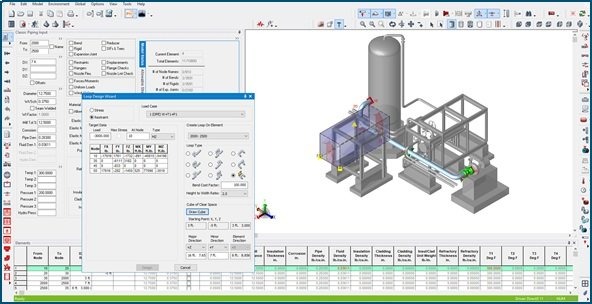
Caesar2

CAESAR II PSA

Pipe stress analysis is a systematic, mathematical study used to evaluate the stresses and displacements in a piping system. Think of it as a comprehensive health check-up for your pipes.

An engineer uses specialized software to build a virtual model of your entire system. They then subject this model to all the real-world conditions it will face:

  1. Pressure: The internal force from the fluid or gas being transported.
  2. Temperature: The thermal expansion and contraction that occur as the fluid’s temperature changes (often the single biggest source of stress).
  3. Weight: The dead weight of the pipe, fluid, and insulation.
  4. External Loads: Forces from wind, seismic activity (earthquakes), or external equipment (like pumps or valves).

The goal is to verify that the stress imposed on the pipe wall, fittings, and supports remains within the limits defined by industry codes, such as ASME B31.3 for process piping.

Why Is This Analysis Critical for Your Operation?

Skipping or shortchanging pipe stress analysis is a classic example of being penny-wise and pound-foolish. The costs of a failure far outweigh the cost of analysis.

1. Prevent Catastrophic Failure and Leaks

The most immediate benefit is safety. Excessive stress can lead to fatigue cracking, flange leaks, or even a sudden rupture. Analysis ensures that your system can handle every operational scenario without a catastrophic failure that endangers personnel and the environment.

2. Protect Expensive Equipment

Piping doesn’t exist in a vacuum; it connects to critical, often multi-million-dollar equipment such as pumps, turbines, and heat exchangers. If a pipe expands excessively and pulls on a connected nozzle, it can cause severe damage or destruction to that equipment, resulting in substantial replacement costs and prolonged downtime.

3. Ensure Reliability and Uptime

A properly analyzed and supported system experiences less vibration, less wear on supports, and fewer flange leaks. This directly translates into higher operational reliability, minimizing unexpected shutdowns —the biggest drain on a plant’s profitability.

4. Improve Support Selection

This is where analysis meets reality. Once the stress engineer knows where the forces are greatest, they can correctly design and specify the right supporting elements. Are standard clamps enough, or do you need specialized solutions such as pipe shoes, slides, or anchors to manage movement and transfer loads safely to the structure?

Pipe Stress Analysis Software
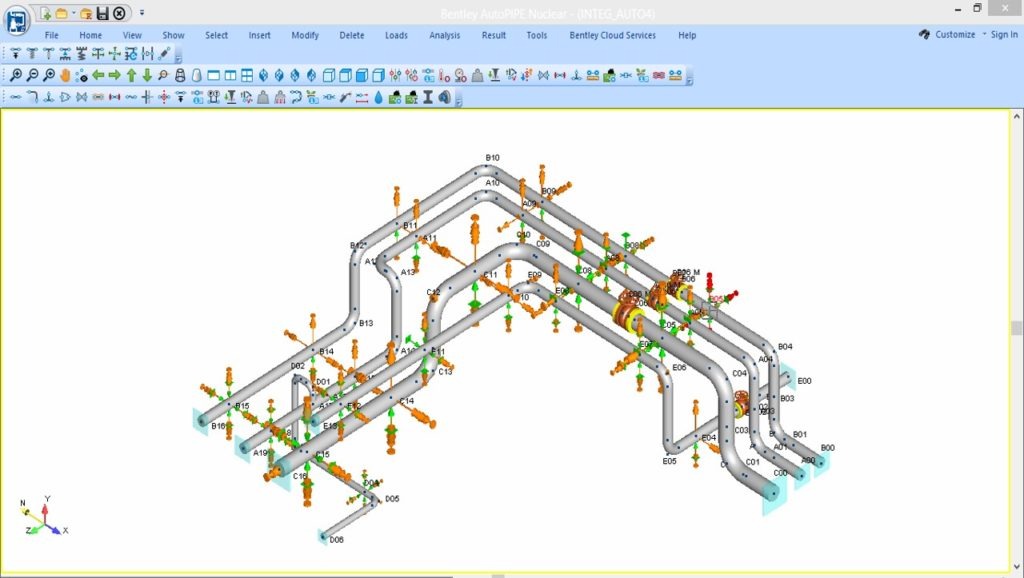
Autopipe psa

AutoPIPE PSA

Performing a thorough pipe stress analysis is a task too complex and iterative to be done manually. Specialized pipe stress analysis (PSA) software is essential for creating detailed virtual models, applying various load cases, and performing the millions of calculations required to comply with industry codes.

These sophisticated programs allow engineers to:

  • Rapidly model complex pipe routing, components (valves, fittings), and support structures.
  • Accurately simulate real-world conditions like thermal expansion, seismic events, wind load, and transient conditions (e.g., water hammer).
  • Automatically check results against stringent design codes (e.g., ASME B31.3, B31.1) to confirm compliance.

A few key players dominate the market, each offering powerful tools with slightly different specialties and features. The most recognized and widely used software packages globally include:

  • CAESAR II (Hexagon): Arguably the industry standard, known for its extensive code compliance checking and user-friendly interface.
  • AutoPIPE (Bentley Systems): Highly capable, often praised for its integration with CAD and structural analysis programs.
  • CAEPIPE (SST Systems): A well-established tool favored for its speed and intuitive graphical user interface (GUI).

Selecting the right software is crucial, as its accuracy and features directly impact the reliability of your final design. The results of this virtual analysis guide real-world decisions about where and how to place the critical pipe supports.

The Support Solution is Key

Stress analysis identifies the problem, but pipe supports are the engineered solution. If a study shows excessive movement or load on a critical elbow, the correct support, chosen for its material, design, and load capacity, is essential to resolve the issue.

At Pipe Shields, we specialize in high-quality, engineered supports that implement the findings of your stress analysis. We turn theoretical safety into physical reliability. By using the right shields, slides, and clamps, you ensure that the structure in the field safely manages the stresses calculated in the model.

Your Piping System Can’t Talk, But Our Piping Technology Team Can Read Its Stresses

Pipe stress analysis is the first step to guaranteed piping integrity. It’s not just a compliance checkbox; it’s a fundamental investment in your plant’s future.

Piping Technology & Products (PT&P) is the essential physical assurance against the high costs of piping failure.

After your pipe stress analysis identifies critical stress points, we provide the precisely engineered supports (pipe shoes, guides, slides) that safely absorb and dissipate those forces, protecting your multi-million-dollar equipment and protecting your investment in piping infrastructure. Get started with a PT&P pipe stress analysis now.

Don’t wait for a leak or a failure to realize your piping system is under-designed. Speak with one of our experts to receive a customized quote to improve safety and extend the lifespan of your piping system.  

Read More
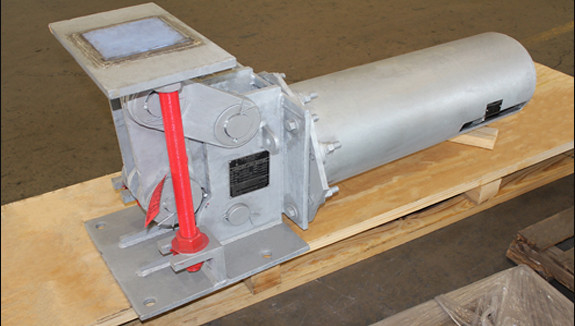
U-Type Constants Designed with Slide Plates for a Polypropylene Plant in Texas

October 27, 2025

147164a1

Constants use a spring coil (or series of coils) to accommodate pipe movement from the initial (installed) condition to the final (operating) condition of the piping system. For all constant spring supports, there is no difference in load, and the supported load will remain uniform throughout the deflection cycle.

PT&P designed and fabricated a U-Type constant spring support , with PTFE and a 25% glass-filled side plate for a Polypropylene Plant in Texas. The constant is fabricated from carbon steel and hot-dipped galvanized for extra protection against corrosion. The vertical movement is 1.5″ total upward travel and is capable of supporting a load of 10,350 lbs. throughout its range of movement. The constant underwent standard load testing prior to shipment.

Along with chemical plants, constant spring supports are utilized in refineries, power plants, and heat recovery steam generators (HRSG). The design of the constant spring support replaced a system of pipe support called a “counterweight” design still used in some facilities today. The counter-weight system utilized pipe clamps or lugs (attached or welded to the pipe), cables, pulleys, and a set of weights. Just like the old-fashioned brass weighing scales, weights were added to one end of the pulley system until an equilibrium was reached. The counterweight design needed a large amount of space with which to operate. Constant spring hangers replaced this system because they require much less space in order to function (similar to some designs we stand on to weigh ourselves). No matter the application, our team of experienced engineers and designers can help to resolve your pipe support needs. Please contact us via our 24×7 emergency service or send an email to info@pipingtech.com.

PT&P REF. ORIGINAL POST 08232016

Read More

Cold Shoes and Hot Shoes Designed for an Ammonia Project

October 13, 2025

Insulated Pipe Supports Designed for Cryogenic and High Temperature Pipe Systems for an Ammonia Project

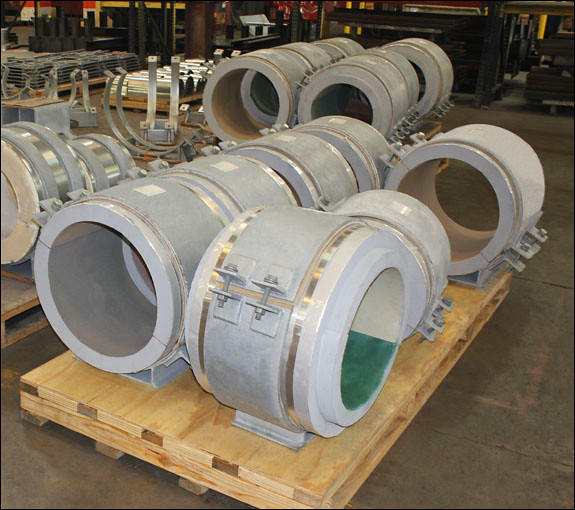
Insulated pipe supports are designed to prevent direct heat transfer between pipes and their supports. Thus, they prevent heat loss due to conduction at each support. Whether a cold or hot temperature pipeline, the transfer from cold to hot or hot to cold is prevented.  They serve the following purposes: Carry the load and allow necessary movement (when used with slide plates) at each point of support, provide insulation in the support area where the regular pipe insulation is not sufficient to support the load and minimize installation costs by reducing the time required to install the support. The supports are not welded to the pipe, and each unit is shipped completely assembled (except for the riser supports and anchor supports, both of which require some welding).  In HVAC and plumbing applications, insulated supports also help prevent condensation and corrosion under insulation (CUI) by maintaining the vapor barrier at the support point. Their use contributes to better energy performance, reduced maintenance, and compliance with MEP design standards focused on energy efficiency and moisture control in building systems.

For this project, we custom-designed 98 insulated pipe supports for an ammonia project at a chemical plant in Louisiana. The supports were designed for both cryogenic and high-temperature pipe systems, with an 8″ to 22″ baseplate width and a 10″ to 28″ saddle length. They were designed for pipe diameters of 6″-24″ and are composed of polyurethane foam for cryogenic and high-density calcium silicate insulation for high temperatures. Standard Q.C. and dimensional tests were performed prior to shipment.  

This project was a combination of upgrading a current anhydrous ammonia plant and adding new capacity to the facility.  We worked with the EPC, on-site contractors, and operators to ensure specifications and delivery deadlines were met over a three-year period during project construction.  In addition to the insulated supports discussed here, we designed, manufactured, and shipped bellmouth reducers, metallic expansion joints, pipe shoe guides and anchors, pipe hanger hardware, slide plates, snubbers, sway braces, struts, and variable spring supports.

Beyond ammonia and chemical processing facilities, insulated pipe supports are widely used across other industries where thermal control and system integrity are essential. These include petrochemical plants, LNG and cryogenic gas facilities, power generation plants, and district energy systems for heating and cooling networks. They are also integral to MEP infrastructure in data centers, pharmaceutical manufacturing, and food processing plants, where preventing condensation and maintaining precise temperature control are critical. In each of these applications, insulated supports help maintain energy efficiency, protect against corrosion under insulation, and ensure long-term reliability of piping systems operating under extreme temperature conditions.

PT&P REF. ORIGINAL POST 06232015

Read More

F-Type Constant Spring Supports Designed and Manufactured for Gas Plant

September 29, 2025

F-Type Constant Spring Supports Designed and Manufactured for Gas Plant

Type: F-Type Constant Spring Supports
Size: 36″- 87″ Length | 24″ Height
Material: A36 Carbon Steel | HDG | SS Slide Plates
Design: 13,500 lb. Load | 250°F | 17.5″ Travel
Testing: Q.C. Inspection | Load and Travel Tests

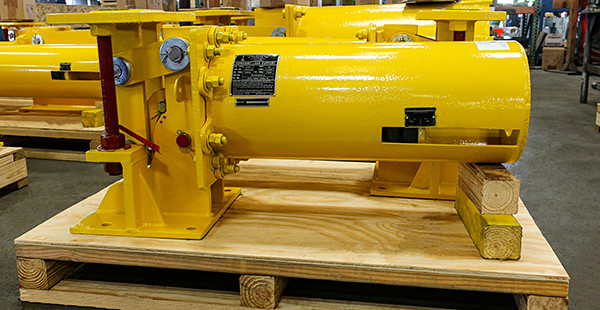
We custom-designed multiple horizontal F-Type constant spring supports for a series of offshore gas platforms located in the Persian Gulf, near the coast of Saudi Arabia. These constants feature stainless steel slide plates and are engineered for a total travel of 17.5 inches. Fabricated from carbon steel, they are hot-dipped galvanized and coated with a specialized three-layer paint system to withstand the harsh, highly corrosive environment. Per the client’s specification,  the topcoat is painted “Safety Yellow” for easy identification.

To further enhance corrosion resistance, the bolting assemblies used in constructing these units were coated with a fluoropolymer, which also helps to reduce friction and wear. Each assembly measures 24 inches in height and ranges from 36 to 87 inches in length. They are designed to operate at temperatures up to 250°F and handle loads of up to 13,500 pounds. Load testing and dye penetrant inspections were performed in-house to ensure quality and reliability before shipment.  Our manufacturing is based on a long test and reliability work methodology, with our roots in engineering and design when we started as a pipe stress company.  In addition to manufacturing the products our customers design for their specific applications, we also conduct testing to meet both our quality standards and their requirements.  

F-type constants manage loads, thermal compensation, vibration dampening, and vertical and lateral movements in piping systems.  We have supplied constants for a myriad of end applications worldwide.  The industries we have worked with that need this kind of product in their piping systems include: 

  • Energy and Oil & Gas
  • Chemical and Petrochemicals
  • Renewable Energy and Sustainability 
  • Industrials and Manufacturing
  • Automotive
  • Semiconductor
  • Pulp and Paper
  • Utilities and Power
  • Construction and Building Materials 

We have optimized our manufacturing process to offer an unparalleled range of customization options with minimal impact on delivery timelines. In addition to our standard (hot-dipped galvanized carbon steel with neoprene-coated spring coils) constant spring supports, we can customize any material, finish, dimension, load, load adjustment, travel, and travel stops, as well as provide sensors for remote monitoring. 

Historically, obtaining a custom-designed constant spring support posed a significant challenge in terms of both design and manufacturing, with lead times extending to a minimum of 6-8 weeks.

Through a dedicated focus on manufacturing optimization and employing a design-centric engineering approach, we have reduced the required manufacturing time by more than half. The process of acquiring custom constant spring supports is now significantly streamlined. In fact, we are capable of fulfilling emergency orders in less than 24 hours, taking into account the client’s location and urgent requirements.

We can also provide the services of our well-trained field service teams for installation guidance, should it be needed.  

At our Houston-based facility, we design and manufacture constant spring supports with unmatched speed and precision. Operating 24/7, we are equipped to handle both small emergency orders and large-scale production needs. Our wide range of industry expertise demonstrates our unique ability to provide solutions across the globe in every sector we serve.


Read More

Unlocking Pipeline Efficiency: The Ultimate Guide to Pig Launchers

September 15, 2025

Us bellows pig launcher

Your pipeline is the circulatory system of your operation, and just like a human body, it requires routine maintenance to function at its peak. 

In chemical and petrochemical industries, pigging systems are used to separate different products within a pipeline to prevent contamination, as well as for cleaning and inspection. In water and wastewater treatment, they help remove sediment, biofilms, and scale from municipal mains to improve water quality and flow efficiency. In the food and beverage sector, pigging is employed to reclaim valuable products and prevent cross-contamination when transporting different batches of liquids such as chocolate, dairy, or juices. Similarly, in pharmaceuticals and cosmetics, pigging is applied in sanitary processes to clean and inspect pipelines, ensuring product purity and compliance with strict hygiene standards.

Pigging: the act of using a device called a “pig” to clean, inspect, or maintain a pipeline, is the most effective way to achieve optimal performance from your piping operation. And at the center of any successful pigging program is the pig launcher.

A pig launcher is a specialized piece of equipment that safely introduces a pipeline pig into a pressurized line. It’s a critical component that delivers efficient and safe pigging operations. 

Choosing the right one is important. This guide will help you understand the benefits and options available, enabling you to make an informed choice that will aid in maintaining a debris-free piping operation.

Equipment

The physical infrastructure is essential for any pigging operation. This equipment, including pig launchers and receivers, enables the safe and efficient introduction and removal of pigs from the pipeline.

  • Pig Launcher: An oversized section of pipe where a pig is loaded and then launched into the main pipeline. It’s equipped with a quick-opening closure for easy access and various valves to control pressure and fluid flow.
  • Pig Receiver: Located at the end of a pigging run, this is a similar oversized section of pipe designed to catch the pig and any debris it pushes. It also features a quick-opening closure for retrieving pigs and debris.
  • Kicker and Bypass Lines: The kicker line is a smaller pipe that directs a portion of the product flow into the launcher to propel the pig. Bypass lines are used in receivers to allow continuous product flow while the pigging process is underway.

Why Pig Launchers Are Important for Your Piping Operation

Investing in a quality pig launcher isn’t just about maintenance; it’s about safeguarding your assets and maximizing your return. The benefits extend far beyond a clean pipe:

  • Boosted Productivity and Flow: Debris, wax, and scale buildup inside pipelines can restrict flow, increase friction, and reduce overall throughput. Regular pigging removes these blockages, improving flow rates and boosting operational efficiency.
  • Reduced Operational Costs: By recovering valuable products, minimizing waste, and decreasing the need for extended shutdowns for manual cleaning, pigging systems can lead to significant cost savings.
  • Increased Safety: Modern pig launchers are designed with safety features, such as quick-opening closures and pressure relief devices, to protect personnel and equipment during operations, thereby mitigating risks associated with high-pressure systems.
  • Product Batching and Separation: For companies that transport different products through the same pipeline, pigging allows for the effective separation of batches, preventing cross-contamination and ensuring product purity.

For a deeper dive into how custom solutions can address specific challenges, read our companion piece: Custom-Designed Pig Launcher.

Your Options: Choosing the Right Pig Launcher

Pig launchers are not one-size-fits-all. They are highly customized based on your specific application, pipeline dimensions, and operational needs. Here are the key factors you need to consider:

Sizing and Pressure

The most important considerations are the size of your pipeline and the operating pressure. The launcher’s major barrel must be large enough to hold the pig, while the minor barrel must match the diameter of the pipeline. Our capacity for design pressure range is up to  4000 PSIG (pounds per square inch gauge) for pig launchers and receivers:

Material Selection

The material of the launcher is critical for lifespan, application, and media integrity . Most are fabricated from carbon steel, but for corrosive or sanitary/food grade applications (e.g., food and beverage/pharma), materials like stainless steel are often required to prevent contamination and withstand harsh environments.

Level of Automation

Pig launchers come with various levels of automation. From simple, manually operated systems with flag indicators to fully automated, remotely controlled units, the choice depends on your budget and the frequency of pigging operations. Automated systems reduce operator involvement, increase safety, and enable more frequent and aggressive pigging programs.

Things We Need to Know, Before We Quote a Pig Launcher or Receiver 

  • What will the launcher be used for, liquid or gas? This will determine the design code.
  • What will be the pressure and temperature of the fluids in the operating system?
  • Will you need supports (legs) to be included?
  • What type of finish will you select? The standard finish is our shop primer.
  • Do you have any special requirements? Anything added to a launcher or receiver can increase both complexity and cost.
  • What is the location of closure, where the pig will be loaded? As pressure requirements increase, closure options become more restrictive.

Specialized Features

To optimize your system, consider these options:

  • Quick-Opening Closures: These are essential for safe and rapid access to the launcher barrel, allowing for the insertion or retrieval of the pig.
  • Instrumentation Ports: These allow for pressure monitoring, while vents and drains are crucial for depressurization and cleaning.
  • Bypass Lines: A bypass allows product flow to continue while the launcher is offline for maintenance.

Multiple-Pig Systems: For complex operations, launchers can be designed to hold and launch multiple pigs in sequence, which is ideal for multi-stage cleaning or intelligent inspection.

At Sweco Fab, a Piping Technology & Products company, we offer the following capabilities for pig launchers and receivers:

Fabrication Design Codes Materials of Construction Design Pressure Range Pig Trap Size Ranges Maximum Overall Skid Offered Shop Certifications
ASME B31.4, B31.8, B31.4 & Sec. VIII Div.1 CS, LTCS, SS 304, SS316 & API Pipes Up to 4000 PSIG Line 2″ NPS to 48″ NPS Lines 8′ x 40′ x 10′ (Up to 40,000 Lbs weight capacity) ASME U & R Stamp certified, ISO 9001

Don’t Leave Your Pipeline to Chance: Partner with Piping Technology & Products (PT&P)

Every pipeline is a significant investment, and its performance directly impacts your bottom line. By selecting the right pig launcher and receiver system, you can ensure continuous operation and protect your infrastructure. The decision to pig your pipeline is the first step toward a smarter, more profitable operation. The next step is choosing a partner like PT&P who can provide the right solution, tailored to your exact specifications.

Ready to boost performance and safety in your pipeline operations? Contact our experts and request a quote today to design a custom pig launcher.

Read More

September 2025 News: PT&P is Awarded the ISO Certificate

September 5, 2025

PT&P is Now ISO 9001:2015 Certified (09-05-2015)
Piping Technology & Products, Inc. is awarded the ISO 9001:2015 certificate by DNV Certification, a division of Det Norske Veritas (DNV), for the Manufacture of Hot and Cold Pipe Supports. This certificate proves that PT&P’s Quality Management System has been certified against the best practice standard and is compliant.

ISO 9001:2015

View ISO 9001:2015 Certificate

The latest version of standards, ISO 9001:2015 is created by the International Organization for Standardization (ISO), who set international requirements for Quality Management Systems. By conforming to the Quality Management System, Piping Technology & Products, Inc. demonstrates predictability of internal operations and the ability to meet customer requirements. While becoming certified, a company can identify the areas that are most critical to operations through management system audits. Once problem areas are identified, measured, managed and improved, customer satisfaction will rise, staff responsibility and motivation will also experience growth.

Read More

Built for Real-World Vertical Support: Custom Riser Clamp Assemblies That Hold the Line

July 21, 2025

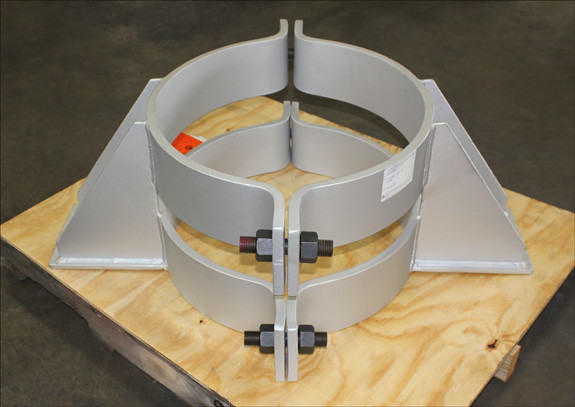
Pipe Clamp Assemblies Custom Designed for a Partial Oxidation Unit in a Synthetic Gas Plant

When vertical piping in a high-pressure system starts to shift, everything downstream is at risk. Hanger misalignment, accessory failure, and field delays would be the least of your worries when vertical pipe systems experience axial displacement. 

That’s where Piping Technology & Products’ custom riser clamp assemblies deliver assurance engineers can count on. With the proper design specifications, PTP can manufacture precision riser clamps that ensure secure and reliable product delivery.

Purpose-Built for Vertical Load Control

Riser clamp assemblies are specifically engineered for vertical pipe systems where axial movement must be restricted. It is not a one-size-fits-all product. Each assembly is fabricated to fit exact pipe diameter, temperature, and load specifications, most commonly for critical process lines in synthetic gas, petrochemical, or tall vertical rack applications.

At its core, the assembly relies on a heavy-duty steel clamp secured around the pipe, working in tandem with thrust plates to manage axial loads. 

For high-heat applications, manufacturers utilize A387 alloy steel (rated for service temperatures of 750°F to 1,000°F) and a high-temperature coating that won’t degrade or flake under scorching conditions.

Once installed, the clamp limits movement in the downward direction, ensuring the pipe doesn’t slip under load or due to temperature expansion. Engineers often pair the clamp with spring hangers or sway struts for a complete load path solution.

Real-World Application: Synthetic Gas Plant Retrofit

At the request of a synthetic gas facility, PTP engineered a custom riser clamp assembly for their high-temperature vertical piping. We used Alloy A387, a heat-resistant steel specifically selected for service temperatures reaching up to 1,000°F, to fabricate this assembly. 

To ensure performance under thermal cycling, we coated the clamp with a high-temperature industrial-grade coating designed to withstand prolonged exposure without degradation. By preventing vertical slippage during system startup, the clamp maintained alignment integrity and eliminated the risk of early rework or other types of damage to the pipeline.

Common Use Cases for Riser Clamp Assemblies

Riser pipe clamp assemblies serve a critical role in applications where vertical piping must be securely supported and restrained. 

Engineers commonly use them on vertical risers in fired heater loops, where high temperatures and axial loads demand reliable restraint. They also support tall structural pipe racks in petrochemical plants, ensuring alignment across multi-level piping systems. 

In high-rise and offshore environments, riser clamps provide secure anchoring for firewater systems subject to seismic or dynamic loading. Additionally, LNG facilities rely on them for vertical steam lines that require thermal movement control and long-term integrity.

Key Benefits for Field Execution

PT&P’s custom riser clamp assemblies provide clear advantages for vertical piping systems. 

They prevent pipe slippage by firmly securing the line in place, ensuring axial stability under load. 

Each assembly is custom-sized to match the exact pipe outer diameter, specified load, and temperature range, eliminating fit-up issues during installation. 

PT&P designs these supports to handle pipe sizes up to 48 inches and fabricates them with high-temperature materials and coatings that perform reliably in scorching environments. 

Engineers apply Finite Element Analysis (FEA) to optimize steel thickness, reduce excess material, and validate structural integrity. 

By managing design, fabrication, and delivery in-house, PT&P minimizes handoffs and reduces the risk of delays or errors throughout the supply chain.

Why Engineers Choose Riser Clamp Assemblies

Engineers value this clamp for its precision and structural integrity. Load ratings are validated through FEA, ensuring that the clamp can stand against almost any surprise event. For jobs with elevated temperatures or non-standard loads, our custom approach removes guesswork from spec compliance.

Why Project Managers Chose Riser Clamp Assemblies

What sets these clamps apart is how they minimize scope creep. 

When clamp assemblies are properly designed from the start, there’s no field modification, no install surprises, and fewer RFIs. The result: less rework, better schedule control, and a clear value add during procurement planning.

Other Items Often Purchased with Riser Pipe Clamp Assemblies

Talk to an Engineer

Need a riser clamp that fits your piping system? Our team is ready to review your load, pipe size, and environment to build the right assembly fast.

Request a Quote or Talk to an Engineer today.

Read More

Trunnion Base ELL (Elbow) Pipe Supports for Cryogenic Piping: Proven Thermal Isolation and Custom Fit

July 14, 2025
Trunnion Base ELL Supports for a Cryogenic Line

What is a Trunnion Pipe Support?

A trunnion pipe support is a structural component used to support a piping system and is connected directly to the process line. It functions as a secondary pipe element, helping hold the main line in position for stability.  ASME standards guide their application and analysis to ensure safety and reliability, particularly in high-energy piping and under various operating conditions. 

In standard applications, trunnions are used to:

  • Support sections of pipe vulnerable to weight or stress
  • Help manage pressure at directional changes like elbows
  • Provides added stability and structural strength by helping reinforce the system at critical load points
  • Prevent displacement under heavy loads or external forces

In cryogenic systems, however, added challenges emerge. Maintaining thermal insulation at support points is critical. Without it, heat transfer through the support could lead to the evaporation of liquids into gases, cause condensation, and/or result in ice buildup. Over time, this can damage the pipe or disrupt flow.

Custom Trunnion Base ELL Pipe Supports for Cryogenic LNG Applications

Trunnions Designed with Insulation for an LNG Facility

At an LNG gasification facility, our customer required pipe supports that could prevent the transfer of heat and provide trunnion-like stability and strength. Piping Technology & Products collaborated closely with the client to design a customized solution that met both mechanical and thermal performance requirements.

The result was a trunnion base ELL support with a layered construction: an A36 carbon steel base, an integrated insulation block, and a stainless steel pipe saddle. This configuration prevented heat transfer between the pipe and the support.

By incorporating an insulation block into this design, we prevented heat transfer from the trunnion pipe support to the process line, which is a feature that a standard trunnion does not offer. The trunnion keeps the cold pipe separated from warmer support steel, suppressing frost build-up at the base and pipe rack. The pre-insulated support design maintained a steady temperature for the LNG from Point A to Point B, preventing it from warming up and converting from a liquid into a gas.

What Is a Trunnion Base ELL Support and How Does It Work? 

A trunnion base ELL support for LNG applications is a specialized insulated pipe support designed for cold-service and cryogenic process lines. It supports the main pipe while creating a thermal break between the pipe and the support base.

Unlike standard trunnions, which are not designed to address thermal integrity, this design minimizes thermal bridging. 

It typically uses:

  • A carbon steel base for structural strength
  • A block insulation layer to isolate temperature
  • A stainless steel pipe saddle that connects to the process pipe

Where Trunnion Base ELL Supports Are Used

Trunnion base ELL supports are specifically designed for cold-service environments where thermal performance is critical. 

They are commonly used in LNG liquefaction and gasification facilities, where maintaining sub-zero temperatures is essential to system operations and safety. These supports also play a key role in ethylene and ammonia plants, which use chilled piping to move process materials while minimizing energy loss. 

In all cases, the design enables operators to move product from one stage to the next without experiencing temperature changes, condensation, or structural complications caused by frost buildup.

Key Field Benefits

  • Thermal isolation is built in; it prevents cold pipe surfaces from transferring extreme temperatures to structural steel, helping maintain safe operating loads without added field insulation.
  • Reduces condensation, prevents ice formation, and pipe damage
  • Custom-fit to specification for pipe sizes ranging from 2 in. to 60 in., fitting cleanly into the line
  • Supports heavy vertical loads while preserving pipe wall integrity
  • Material matched to the parent pipe  to maintain mechanical and chemical compatibility
  • Delivered fast, often within weeks, even for custom builds
  • Provides rigid support in low-movement areas, preventing pipe sag or collapse in static runs or where line displacement is minimal.
  • Helps reduce stress at elbows and vertical transitions, reinforcing piping in high-pressure or structurally sensitive locations.

Why Engineers Choose Trunnion Base ELL Supports

Engineers specify trunnion base ELL supports when thermal isolation is non-negotiable. These supports are sized according to the process pipe’s outside diameter and insulation thickness, ensuring a proper interface without modifying the pipe’s thermal envelope. 

The materials used, including carbon steel (for areas not in direct contact with the process line), high-performance insulation, and stainless steel, are known to perform reliably in environments that reach as low as -300°F.

Why Project Managers Trust It

Project managers rely on trunnion base ELL supports to avoid the common pitfalls that delay cold-service projects. Because the insulation is integrated into the support design, there’s no need to coordinate separate insulation crews or handle last-minute RFIs about support height or fit-up. 

Eliminating this extra field work speeds up installation, lowers labor coordination complexity, and reduces the risk of frost-related damage during startup. By arriving job-ready and material-matched, these supports enable faster handoff to commissioning teams and help keep the schedule on track.

Related Products Commonly Purchased

Why Choose Piping Technology for Your Cryogenic Pipe Supports

We deliver custom-engineered cryogenic pipe supports built to meet the exact demands of cold-service environments. 

Our in-house team manages the entire fabrication process, from material selection to final delivery, providing you with tighter control over schedule and quality. 

For complex or high-load applications, we can perform Finite Element Analysis (FEA) to verify stress points and optimize steel thickness for performance and safety. With decades of experience and a proven track record in LNG, ammonia, and ethylene systems, we provide both the technical expertise and manufacturing speed your project requires.

Speak with an Engineer about trunnion support specifications or Request a Quote for your next cryogenic line.


Read More

Pipe Support Walkdowns

July 7, 2025

Img 2870


Even the best-designed piping systems can deteriorate over time or encounter challenges due to improper installation or maintenance cycles that need updating.  

A pipe support that’s even half an inch too low can throw off alignment, especially for sensitive rotating equipment. Improper alignment of pipe shoes set at the wrong height, spring cans locked in place due to shipping, or non-functioning pipe supports can go unnoticed, and sometimes not until a costly unexpected shutdown occurs. 

A pipe support walkdown, performed by subject matter experts (SMEs), helps identify these issues before they become costly.

Solution: What is a Pipe Support Walkdown and How Does it Help?

A pipe support walkdown is a field-based verification process for any system using pipe supports or rotating equipment. 

A qualified technician or engineer inspects the installed pipe supports to confirm everything matches the design intent and is safe for operation. That means:

  • Verifying metallic expansion joints are properly aligned, anchors are secure, and shipping bars or restraints are removed to allow unrestricted axial or lateral movement during system operation.
  • Checking spring hangers are unlocked and set to the right load.
  • Verifying hold-downs, clamps, and anchors are tightened and positioned correctly.
  • Catching missing or incorrectly installed components before startup.
  • Ensuring fabric expansion joints are installed without twisting or distortion, frames are properly sealed, and flow direction indicators are correctly oriented to prevent leaks or premature wear.

A pipe support walkdown is not paperwork review. It’s boots-on-the-ground risk prevention.


Key Safety and Performance Benefits

  • Prevents startup failures by identifying locked supports, improper loading, or misalignment.
  • Protects against stress failures like cracked welds or ruptured anchors
  • Verifies load positions so pipe weight transfers as intended
  • Quickly identifies worn or failing rubber, fabric and metallic expansion joints
  • Confirms movement clearance for thermal expansion
  • Reduces incident risk for maintenance and operations teams

Engineer’s Take: Technical Insurance for the System

Walkdowns provide engineers with a final check on real-world variables, such as actual pipe weights, true centerlines, and friction conditions. They’re essential for validating that thermal movement will be absorbed by the system as designed, not resisted due to incorrect installation. For supports like spring hangers and slide plates, this is the only way to confirm field settings match the spec.


Project Manager’s Take: Stop Delays Before They Start

For PMs, plant walk downs are a high-leverage activity. One afternoon walk can prevent weeks of delay from an avoidable error. They reduce RFIs, holdbacks, and rework providing owners with confidence during system turnover. By validating installs, walk-downs keep your project on schedule and helps avoid costly failures and shutdowns.


Pipe Supports to Check and Verify During Walkdowns

  • Variable spring hangers
  • Constant supports
  • Rubber, fabric, and metallic expansion joints
  • Sway struts, snubbers, and anchors
  • And more


Contact our field service team to schedule a pipe support walkdown today. Reduce risk. Validate performance. Finish strong.

Read More

PTFE Slide Plates: Built for Real-World Movement

June 29, 2025

Custom Designed PTFE Slide Plate and Pipe Shoe Assemblies

In many situations, fixed equipment must be able to move in axial and/or lateral directions. 

Surfaces where controlled movement is desired are ideal for Piping Technology’s PTFE Slide Plates. Typically, you will find these slide plates underneath pressure vessels or other heavy equipment, such as pumps and compressors, that must be able to move freely along their support surfaces to prevent unplanned outages or operational downtime. 

Without PTFE Slide plates, friction between metal components puts your equipment at risk of misalignment, ruptured lines, or anchor failures, which in turn shortens the lifespan of both piping and equipment.

PTFE (polytetrafluoroethylene) slide plates help prevent these issues by providing a low-friction interface, enabling smooth movement.

What’s at Stake in the Field

Whether it’s a pipe shoe sliding on a beam or a heavy vessel on embedded steel, surface friction can lock systems in place, causing stress and damage. Without the right slide interface, steel-on-steel friction causes wear, cracking, and eventually system failure. 

PTFE slide plates resolve this issue by reducing friction and maintaining structural alignment, which is especially crucial during thermal cycling. As temperatures fluctuate, pipes expand and contract, and the slide plates allow for this pipe movement without stressing supports or causing misalignment.

How PTFE Slide Plates Work

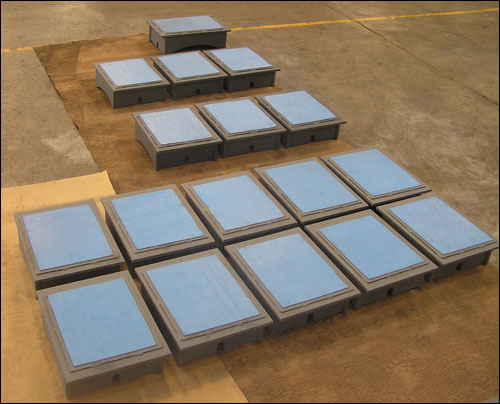
PTFE slide plates are two-part assemblies. PTFE is bonded to a carbon steel bottom plate and is also bonded to the top plate, which makes up the slide plate assembly. Once the bottom assembly is attached to the existing steel and the upper assembly is connected to the bottom of a pipe shoe or trunnion, a low-friction surface is created, allowing for both axial and lateral movement. The PTFE layers are mated from the upper and lower assemblies, allowing movement between the moving component and a fixed support beam or surface.

The result: Easy, controlled movement that reduces load transfer to anchors, minimizes friction, and extends equipment life.

Real-World Example: Natural Gas Pipeline Using PTFE Slide Plates

An international pipeline construction company partnered with us to supply PTFE slide plates for a major gas pipeline project in Africa.

The slide plate assemblies supported pipe shoes mounted on structural steel beams, accommodating both axial and lateral movement while maintaining structural stability.. 

We engineered and delivered twenty guided cradle supports, ranging in size from 8″ to 30″. Each was fabricated from carbon steel and painted for corrosion resistance.  

Thanks to our in-house inventory of PTFE, we accelerated production and avoided costly field delays, delivering exactly what the project needed, right on time.

Where PTFE Slide Plates Are Used

  • LNG terminals
  • Petrochemical plants
  • Refineries
  • Power plants
  • Beneath equipment like pumps and compressors
  • On spring supports 
  • Bridges: Highway bridges, overpasses, railroad bridges
  • Cross-beam and girder slip joints

Key Benefits of PTFE Slide Plates in the Field

  • Produces a low coefficient of friction between a stationary support element and the moving pipe support component
  • Enables controlled pipe movement to prevent overstress during thermal expansion
  • Ideal for low-heat and high-velocity conditions.
  • Minimizes friction between steel components, reducing wear
  • Pairs easily with other supports like pipe shoes and spring cans
  • Operates effectively from –320°F to +500°F, maintaining its low-friction properties across this wide temperature range

Engineer’s Take: Why Choose Our PTFE Slide Plates

PTFE slide plates are a trusted choice for engineers thanks to their high load-handling capacity, consistent low-friction performance, and long-term durability. 

We offer sizes ranging from 4″ x 4″ to 12″ x 12″ (and larger if needed), engineered to support both lateral and axial movement without compromising structural integrity. 

Unlike most suppliers, we stock PTFE in-house, ensuring faster lead times and dependable availability. We can custom-manufacture slide plates to your exact specifications, including custom shapes, thicknesses, and bonding requirements. 

PTFE is easy to install, requires no surface treatment or grouting, and performs reliably in all weather conditions, making it a smart, low-maintenance solution for demanding applications. 

Project Manager’s Take

From the project manager’s perspective, these plates solve several key problems: they reduce rework caused by misaligned pipe shoes, eliminate costly delays waiting for movement-compatible supports, and help preserve the integrity of anchors and foundations. With our rapid turnaround and in-house inventory, you can keep the installation on track and avoid any extended wait time.

Products Often Paired with PTFE Slide Plates

PTFE slide plates are commonly ordered with:

  • Pipe shoes
  • Hold-down clamps
  • Type F variable springs
  • Big Tons
  • Spectacle Blinds 
  • Embed Plates 
  • Pipe Saddles

Why Choose Piping Technology for Your Slide Plate Needs?

At Piping Technology, we stock over one million pounds of mixed inventory (including PTFE), enabling us to manufacture custom slide plates quickly and ship them fast. 

Our slide plates are available in a range of materials, including PTFE, graphite, bronzphite, stainless steel, and more, to meet the unique demands of your project.

We specialize in engineering cost-effective, custom solutions for complex piping challenges. Consult with one of our engineers today to discuss sizing, compatibility, or application needs, or Request a Quote to get pricing and lead times for your next project.

Read More
Top